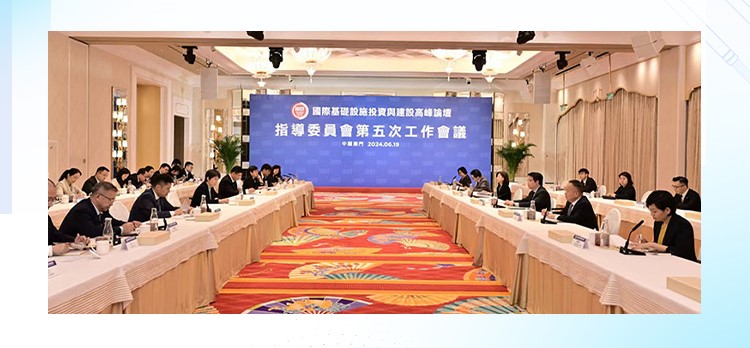
A head-of-state level forum room: every cost line in this article is visible somewhere in this photograph
Ask what a conference room audio system costs and most answers are either a mystery or a sales pitch. The honest structure is neither: a system's cost is the sum of five layers, and once you can name the layers you can read any quotation critically - including ours. This article deliberately quotes no prices, because street prices move faster than articles; instead it tells you what each layer costs you in equipment counts, which is the part that does not move.
Every product referenced is documented with full specifications on this site, so each cost driver can be traced to hardware rather than to adjectives.
What Are You Actually Buying? The Five Layers
Layer one is capture: the microphones at the table - delegate and chairman units, handhelds, or ceiling arrays. Layer two is the wireless or wired backbone that carries their signals. Layer three is the antenna layer, which for wireless rooms is invisible on the floor plan but real on the invoice. Layer four is the audio network that moves channels to DSP, recording and reinforcement. Layer five is processing and room integration: mixing, Dante, noise control, camera tracking triggers.
A quotation that prices only layer one is selling you a room that hums. The layers below are where the real engineering money sits, and where the differences between a small and a large room live.
The Receiver Layer: Chassis Efficiency Is a Cost Decision
Receiver density is the clearest equipment-count lever. A quad receiver such as the UR-2Q holds four true-diversity channels in one 1U frame with one power feed and one antenna pair. Building the same four channels from dual-channel units such as the UR-280 doubles the chassis, the power supplies, the antenna runs and the rack units.
The audio quality argument does not change this: the dual units actually specify better S/N (above 110 dB versus above 105 dB) and flatter response (50 Hz-18 kHz versus 80 Hz-18 kHz, both plus or minus 3 dB or better). Chassis efficiency saves cost; it does not decide quality. What decides quality is whether the room needs the four-channel block at all - a council chamber with two live voices should buy two channels, not four.
The Antenna Layer: Small Money, Massive Consequences
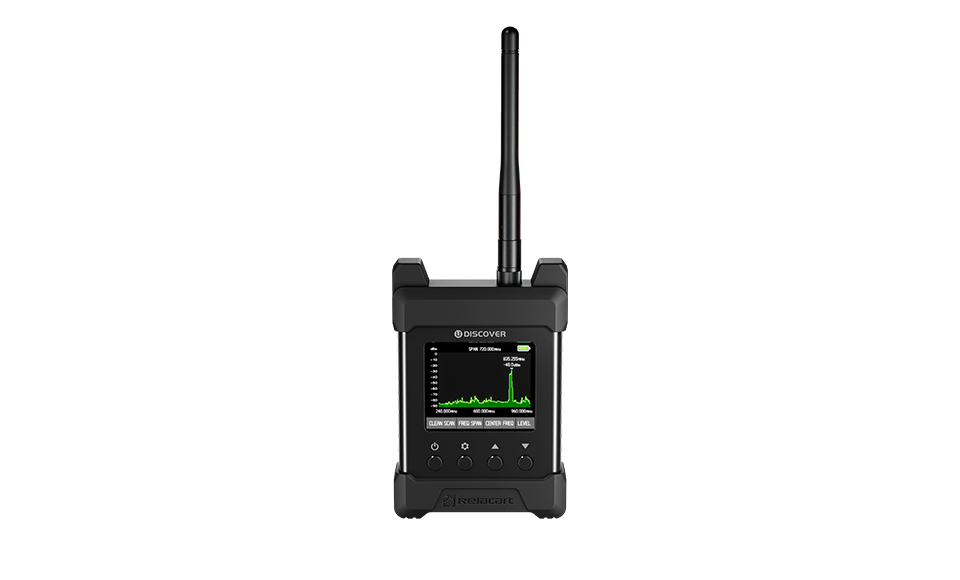
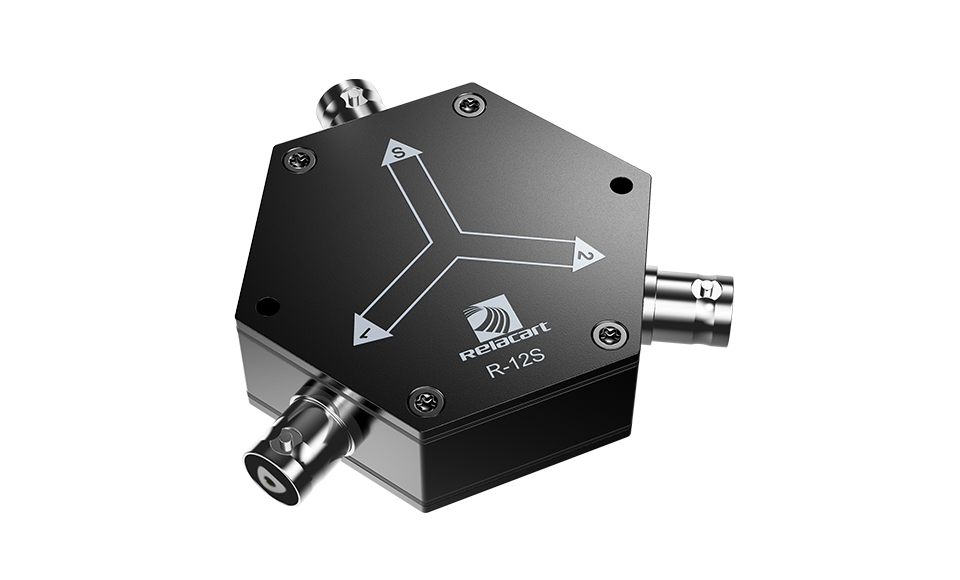
For rooms above eight wireless channels, the antenna layer is the difference between a stable room and a support-ticket generator. The components are modest: a passive divider such as the R-12S (35 grams, no power), an active distribution unit such as the R-14D (one 1U, 0 dB per port), and directional antennas such as the R-20U or powered R-32AU.
The cost of skipping this layer does not appear on the invoice - it appears as engineering hours every time the room misbehaves. Budget it as a fixed architectural line, not an accessory.
Wired or Wireless Changes the Whole Bill Shape
The deepest cost fork is wired versus wireless discussion units, and it is worth making deliberately. Our full comparison lives in wired vs wireless conference systems; the cost view is this:
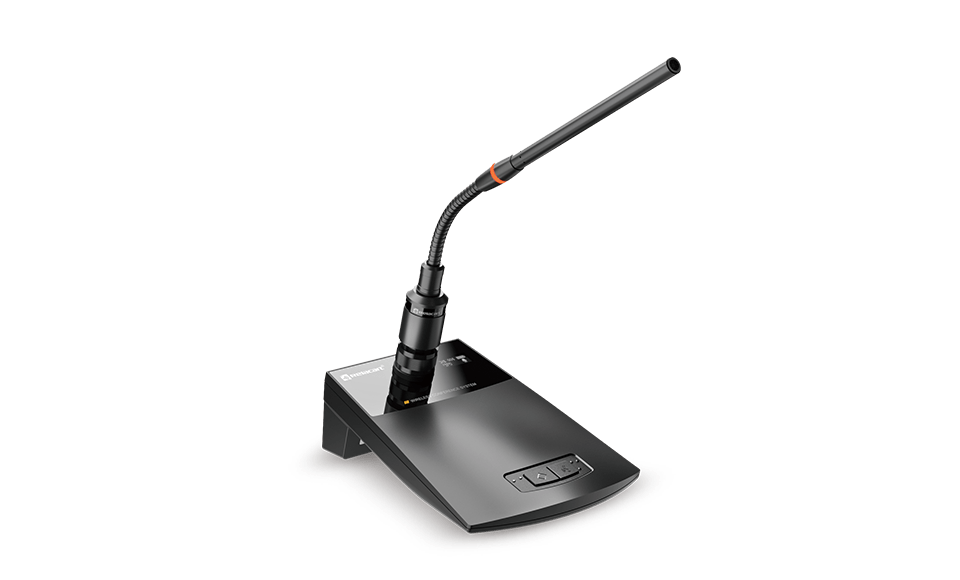
A wired chain such as the CS-302 chairman and delegate series powers every unit from the host at 24 V DC - no per-unit batteries to buy, charge or recycle, ever. Unit electronics are simpler (one microphone capsule, one button set, one OLED), and the cabling is a one-time installation cost. A wireless chain such as the WDC-903 system carries six channels per 1U receiver with Li-ion units running 23 hours per charge (48 hours standby), and buys you freedom from cabling - which in heritage buildings and multi-purpose halls is worth more than the hardware saving.
Hybrid rooms are common and legitimate: wired units for the fixed seats, wireless handhelds and goosenecks for guests and overflow positions.
Cost shape: wired vs wireless delegate units
| Cost line | Wired (CS-302 type) | Wireless (WDC-903 type) |
|---|
| Per-unit power | None - 24 V DC from host | Li-ion battery, 23 h per charge |
| Installation | Cabling + host ports, one-time | None at desks; receiver rack instead |
| Recurring consumables | None | Battery cycling and replacement cycles |
| Room flexibility | Fixed seat positions | Units work anywhere in ~80 m open-space range |
| Spectrum management | Not required | Frequency plan required |
The Network and Processing Layer
Digital audio networking has moved from luxury to default in new rooms. Receivers in the UR and HR lines carry Dante on board, which turns "run an analogue loom to the DSP" into "run one Ethernet cable" - usually a net saving in buildings with existing network infrastructure. Our Dante conference room guide covers the design pattern.
Processing costs are component-sized but room-shaping. A compact digital mixer such as the MiXX8.6 (24-bit/48 kHz, +48 V phantom, USB audio class 2.0, powered from 5 V) covers small rooms end to end. Where acoustic noise is the enemy rather than channel count, an AI-NC100 noise-cancellation processor (20 Hz-20 kHz path, 0-45 dB input gain, 12 V DC) sits between microphone and codec and removes fan and HVAC noise the human ear forgives but the far-end codec does not.
What Drives the Price Up Without Adding Value?
- Buying channel count for peak occupancy the room will hit once a year - size for the busiest normal session instead
- Per-channel antennas for receivers that share one room: distribution hardware is the correct answer
- Premium wideband transmitters for a room whose regional regulation limits usable spectrum anyway (check the regulator first)
- Battery-powered units in a fixed room with mains at every seat - a wired chain deletes a permanent consumable
- A DSP tier the integrator cannot commission - processing that is not tuned is cost, not capability
How Should You Read a Quotation Now?
Line by line, mapping every item to a layer: capture, backbone, antenna, network, processing. Items that map to no layer are the ones to challenge. Then ask the two questions that separate engineering from selling: what is the frequency plan for this room (wireless lines), and what is the battery service model (wireless units). A supplier who answers both with specifics has done the design work; a supplier who answers with adjectives has not.
For the definition-level background, start with what a conference discussion system is, then bring the layer vocabulary back to this article.