Relacart CS-302 wired discussion system installed in a government briefing hall in the Philippines
Choose a wired conference discussion system when the room is fixed, the budget is per-seat sensitive and cabling is acceptable; choose a wireless one when the room must change layout, drilling is not allowed or the same space hosts many different events. Everything else - audio quality, camera tracking, voting - both types can deliver.
This guide compares the two technologies the way an installer would: by what actually happens in the room. The evidence comes from two recent Relacart deployments at opposite ends of the spectrum - the Philippine Charity Sweepstakes Office, which runs a wired CS-302 system, and a Buddhist university in Myanmar, which runs a wireless WDC-903 system.
What Each Technology Actually Does
A wired discussion system chains every microphone unit to the host with one hand-in-hand cable. Power and audio travel down the same chain: the CS-302M host supplies 24 V DC centrally, and the EXP-124 expander works as a repeater to power more units on long runs. Nobody ever changes a battery, and nobody ever changes a frequency.
A wireless discussion system replaces that cable with a radio link. The WDC-903 sends control signaling over LoRa at 433 MHz and carries audio in the UHF band, so up to 255 discussion units can join without a single meter of cable between them, with a maximum of 5 units speaking simultaneously.
Side-by-Side Comparison
Both lines speak Dante, which matters more than the wired/wireless choice itself: either system can hand its audio to a networked DSP or recorder without an analog patch bay. For the wider Dante picture, see our guide to Dante microphones for conference rooms.
Wired vs wireless discussion systems across the dimensions that decide projects
| Dimension | Wired (CS-302 type) | Wireless (WDC-903 type) |
|---|
| Audio path | Hand-in-hand cable, 24 V DC central power | UHF audio + LoRa 433 MHz control |
| Capacity | Up to 110 units with expander (CS-302M) | Up to 255 units, 5 speaking at once |
| Installation | Cable runs needed; cleanest in new builds | No signal cabling; fastest in heritage or rented rooms |
| Room flexibility | Fixed seats around the table | Units can move to any room, any layout |
| Audio networking | Dante interface on CS-302 | Dante interface on WDC-903 |
| Camera tracking | RS-232/RS-422, up to 4 cameras | Pairs with VTS-2000 video tracking |
| Running cost | No batteries, ever | Rechargeable or AA batteries in every unit |
When a Wired System Wins
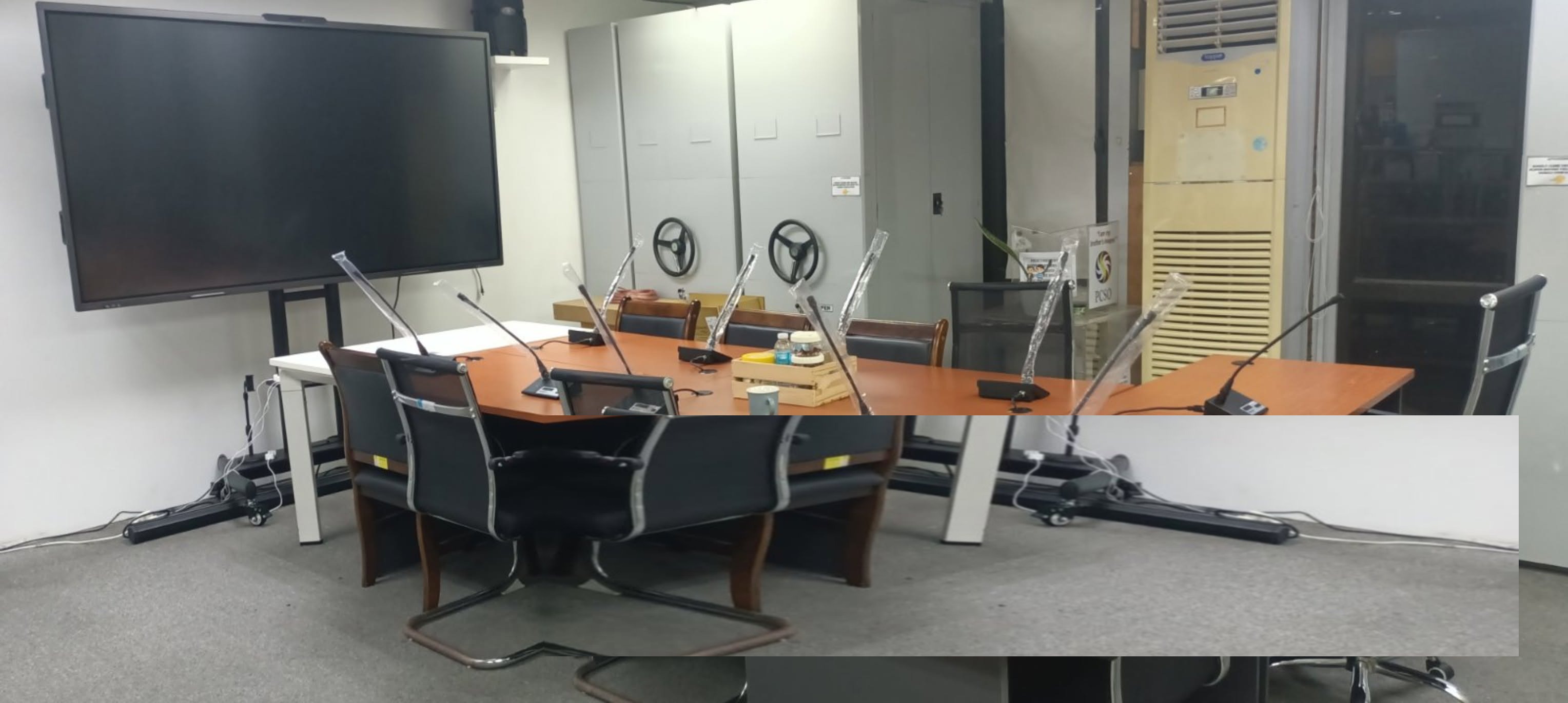
Wired wins when the room is permanent and the users are mixed. The Philippine Charity Sweepstakes Office case is the textbook version: attendees of different backgrounds and ages share the room, so the CS-302D and CS-302C units were chosen partly for their voice-activation mode - simply speak into the microphone and the unit starts transmitting, with a working indicator that lights while speaking, flashes while awaiting approval and stays off at rest.
Wired also wins on the books. There are no batteries to budget and no RF coordination to redo when a neighbor installs new equipment, and the high-voltage low-current power design keeps long cable runs from degrading the signal - one cable carries more units, which is exactly what a fixed 30-seat hall wants.
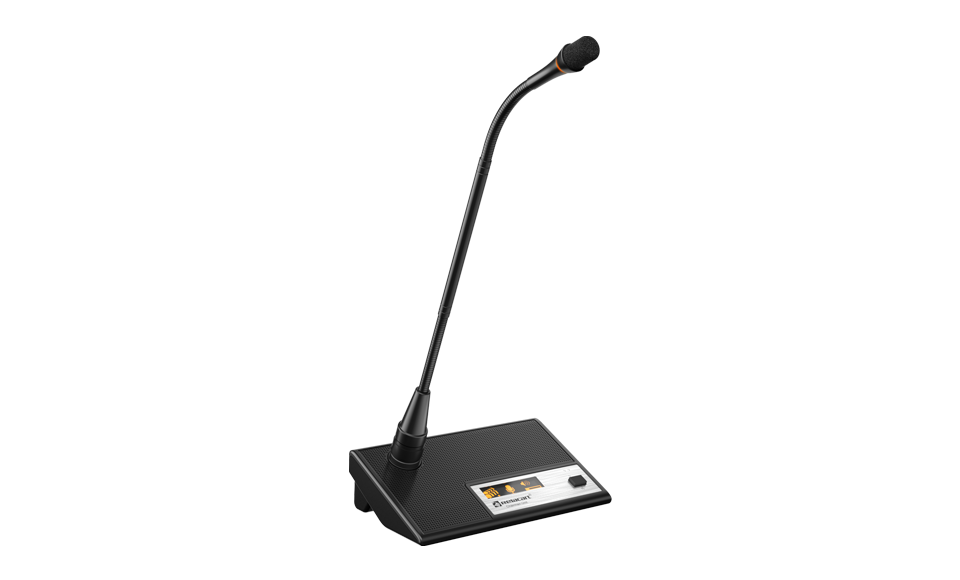
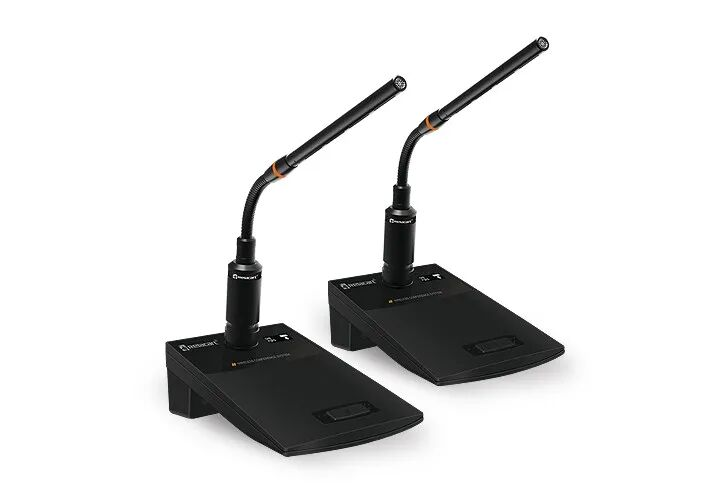
CS-302D chairman and CS-302C delegate units with the CS-302M host
When a Wireless System Wins
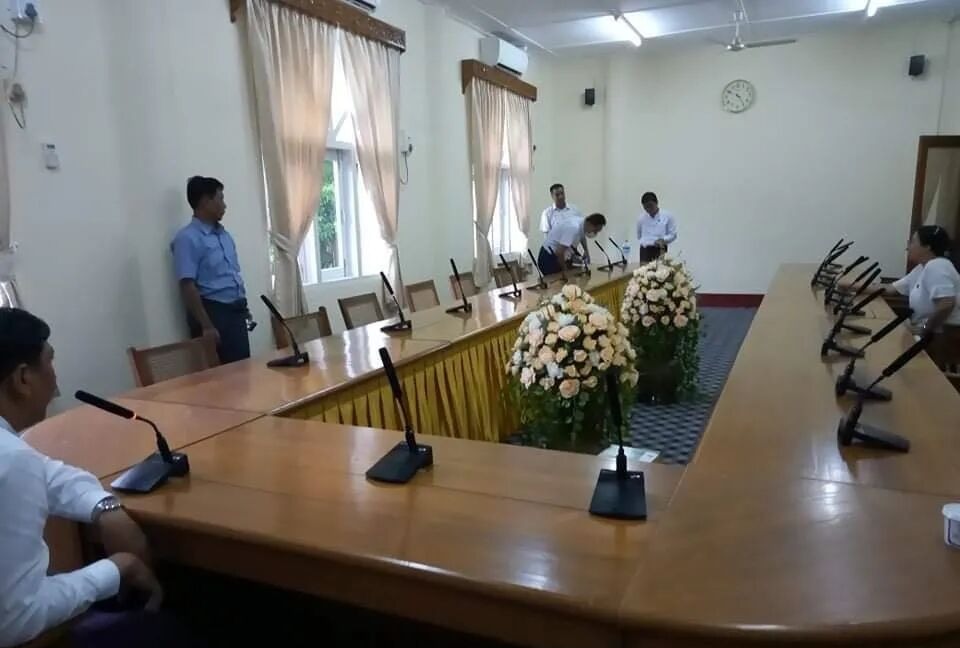
Wireless wins when the room refuses to be drilled. The Myanmar Buddhist university needed a professional discussion system for a large U-shaped table serving 23 participants - but the room also hosts other campus purposes, so the WDC-903 units work reliably in a genuinely multi-purpose environment without tying the furniture to the floor.
Wireless also wins on interference resilience. The WDC-903 automatically searches for interference-free channels and replaces affected ones, and its LoRa control signaling is strongly immune to interference from computers, mobile phones and Bluetooth devices. Units power up automatically when the host starts, so a volunteer can run the room.
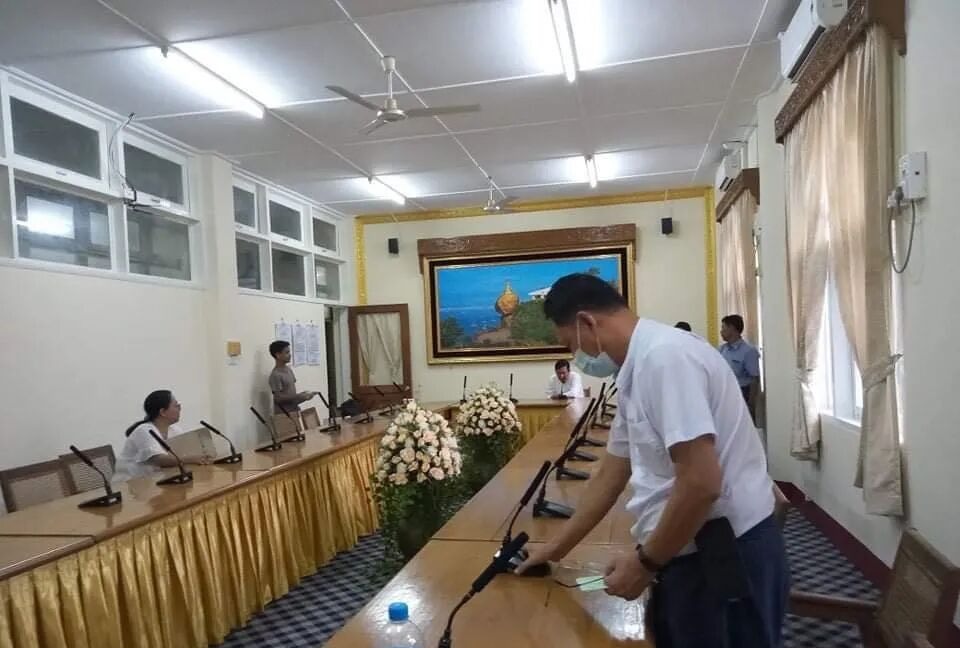
WDC-903 wireless discussion units around a U-shaped table, 23 seats
Selection Checklist
If the checklist splits evenly between the two columns, the practical tie-breaker is construction: new build or renovation favors wired, occupied heritage building favors wireless. Ready to price it? Send your room plan through the contact form and the team will map it to a bill of materials, or browse the full conference discussion system range first.
- Count the seats that will ever exist, not just today's: 110-unit ceiling (wired, with expander) vs 255-unit ceiling (wireless).
- Ask whether the table will move. If the answer is yes, wireless is the only honest answer.
- Decide who operates the system. Voice-activation and auto power-on modes exist for rooms without a technician.
- Check the camera-tracking requirement: both systems control cameras over serial protocols, wireless pairs with the VTS-2000.
- Confirm Dante is on the quote if the room joins a networked audio backbone later.
- For hybrid meetings, verify the remote-participant mixing plan before purchase, not after installation.
- Budget the hidden side of wireless: charging cradles or batteries per unit per year.
- Ask the vendor for a same-size reference installation - government hall, university, or both.
Can a wired and a wireless discussion system work in the same building?
Yes. The WDC-903 documentation explicitly supports installing any number of wireless conference systems in the same building, and its UHF audio band can be coordinated away from any wireless microphones in adjacent rooms.
How many cameras can the systems track?
The CS-302 host controls up to four cameras over RS-232 or RS-422 serial protocols, compatible with VISCA, PELCO-D and PELCO-P code protocols. Wireless systems pair with the VTS-2000 automatic video tracking system.
Which one is cheaper per seat?
Wired units are typically cheaper per seat and never need batteries, but installation cost rises with every meter of cable. Wireless units cost more each and need power management, yet skip signal cabling entirely. Above roughly 100 seats in an occupied building, wireless usually totals less.