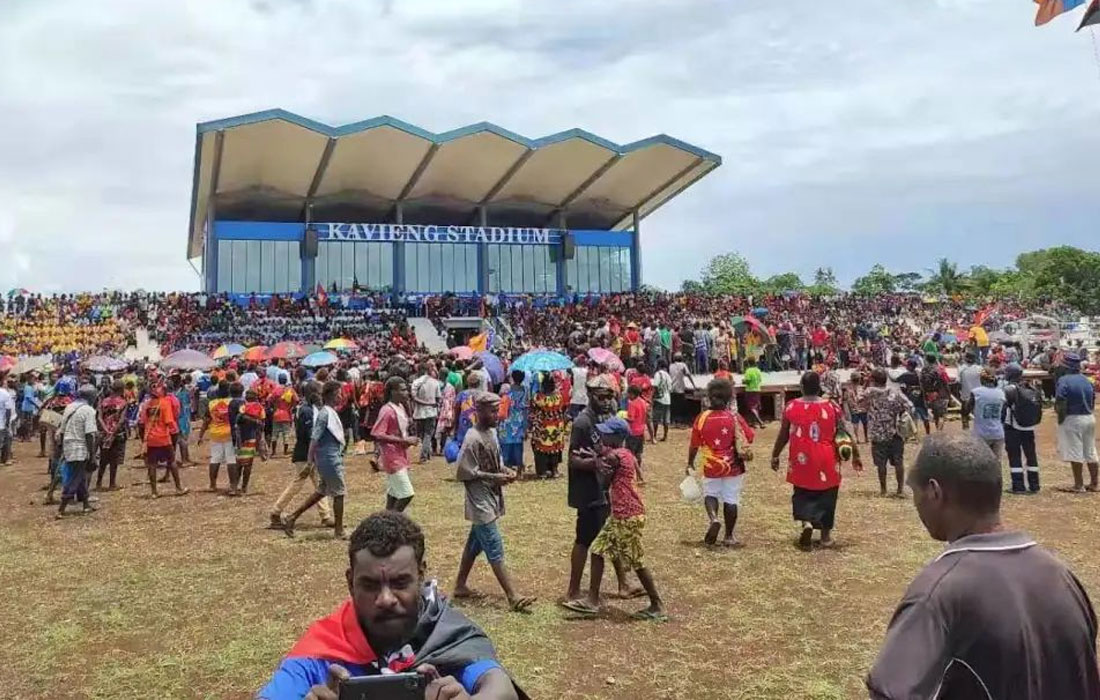
A stadium crowd at Kavieng, Papua New Guinea - every RF assumption from the empty rehearsal changes once this arrives
A wireless system that behaves in a conference room can misbehave on a stage, and the difference is not luck. Performance changes three variables at once: the performer moves through the coverage pattern, the audience arrives and absorbs line-of-sight signal, and the production adds transmitters - band packs, camera links, in-ear monitoring - that the frequency plan must absorb.
This field guide walks the differences in order: what changes, what the performers actually need to hear, how antennas should be placed for moving bodies, and the rehearsal ritual that finds problems while they are still free to fix. Product numbers throughout come from the specification pages on this site.
How Is a Stage Different from a Meeting Room?
Three physical differences drive every other decision. Movement: a performer sweeps the transmitter through the coverage pattern, through nulls a fixed gooseneck would never visit - this is where true diversity reception earns its name, switching continuously between two antennas to escape cancellation nulls (the concept is compared in our true diversity explainer).
Absorption: a full house is a field of water bags between transmitters and antennas; UHF that crossed the empty room at rehearsal strength arrives attenuated once the crowd stands. Height: raising receive antennas above head height recovers signal that a waist-high rack position loses to every body in between.
How Many Channels Does a Typical Show Need?
Count the busiest simultaneous moment, not the show's total inventory. A club band lives comfortably in four to eight channels: lead vocal, backup handheld, and a pair of bodypacks. A festival stage hosting full production acts routinely runs twelve or more wireless channels plus in-ear monitoring, at which point computed frequency planning stops being optional - the arithmetic of why is in our intermodulation planning guide.
Chassis density then decides rack reality: the UR-2Q holds four true-diversity channels per 1U, so a twelve-channel festival rack is three chassis, not six - with one 130 MHz tuning band per chassis to absorb the shared-spectrum surprises a festival site always produces.
What Do Performers Actually Need to Hear?
In-ear monitoring is a performance essential rather than a luxury, and its specification deserves the same scrutiny as the microphone channel. The PM-320 in-ear system works the 470-936 MHz band with a 32 MHz tuning width, delivering a stereo FM link (S/N above 100 dB, 25 Hz-15 kHz response, stereo separation at or above 55 dB) to each performer at 2 x 150 mW headphone output.
Two PM-320 details matter on a loud stage. The limiter acts in 6 dB steps and can be defeated - with it engaged, a sudden stage blast cannot slam the performer's ears. And the receiver runs about 8 hours on two AA cells at roughly 100 grams, so a full show plus soundcheck fits one battery set with margin.
Where Should the Antennas Actually Go?
Two antennas, high and aimed, beat eight antennas scattered. The pattern that works on mid-size stages: one antenna pair per coverage zone, elevated above head height at the downstage edge or flown, aimed at the performance area the zone serves.
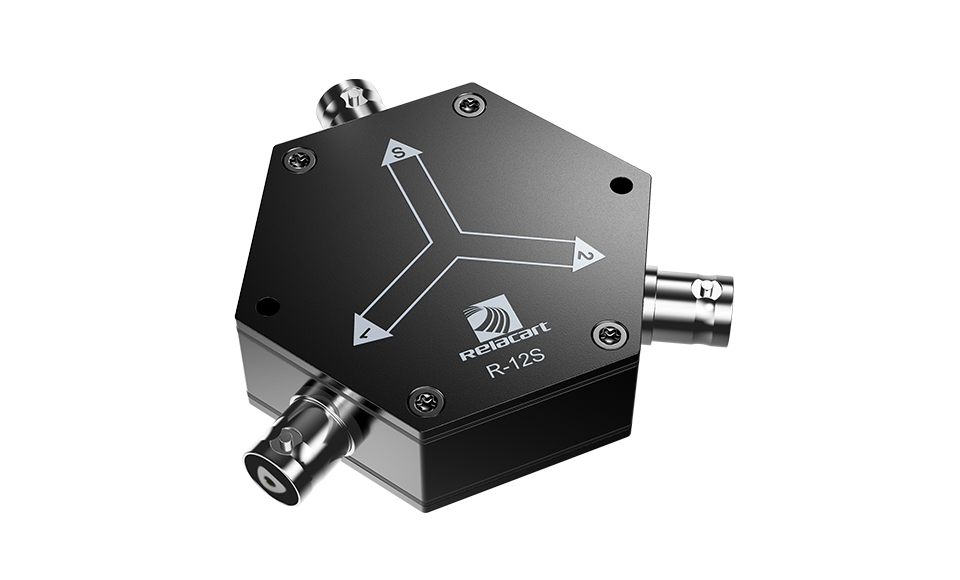
Hardware follows the geometry. For a fixed zone the passive panel R-20U (600-900 MHz, 7 dBi, 80-degree horizontal by 60-degree vertical beam) discriminates against backstage interference. Where cable runs are long or the signal must reach across the venue, the active R-32AU adds a 0-15 dB adjustable amplifier with under-0.45 dB noise, powered over its own coax at 75 mA. Multiple receivers share a zone through the R-14D active distributor - one antenna pair, four clean receiver feeds, no per-receiver antennas bolted to the rack. The full loss math is in the antenna distribution guide.
What Does the Rehearsal Ritual Actually Test?
The ritual is simple and non-negotiable: every wireless system on, full show gain, and a person walking every stage position each transmitter will occupy - including positions during scene changes, not just musical ones. A channel that passes empty-room rehearsal and fails full-load rehearsal has an antenna problem, not a frequency problem; the fix is placement, and the walk test finds it while the fix is still free.
Log the two or three weakest positions show after show. If the same positions fail with different channels, that is multipath, and the antenna map should change; if random positions fail, that is spectrum, and the plan should change.
Show size to architecture
| Show scale | Wireless channels | Working architecture |
|---|
| Club / small hall | 4-8 | One quad or two dual receivers, one antenna pair, spacing-checked plan |
| Theatre / mid festival stage | 8-12 | Computed frequency set, R-14D distribution, one directional pair per zone |
| Large festival / stadium event | 12+ | Full coordination, reserved backup slots, on-site scan verification |
What Did a Real Stadium Deployment Look Like?
A published example: the Kavieng stadium event in Papua New Guinea, documented in our engineering case pages, ran a wideband 130 MHz system configuration for a full-stadium programme - the architecture this guide recommends at the largest row of the table, chosen precisely because a one-shot stadium event cannot re-kit between rehearsal and show.