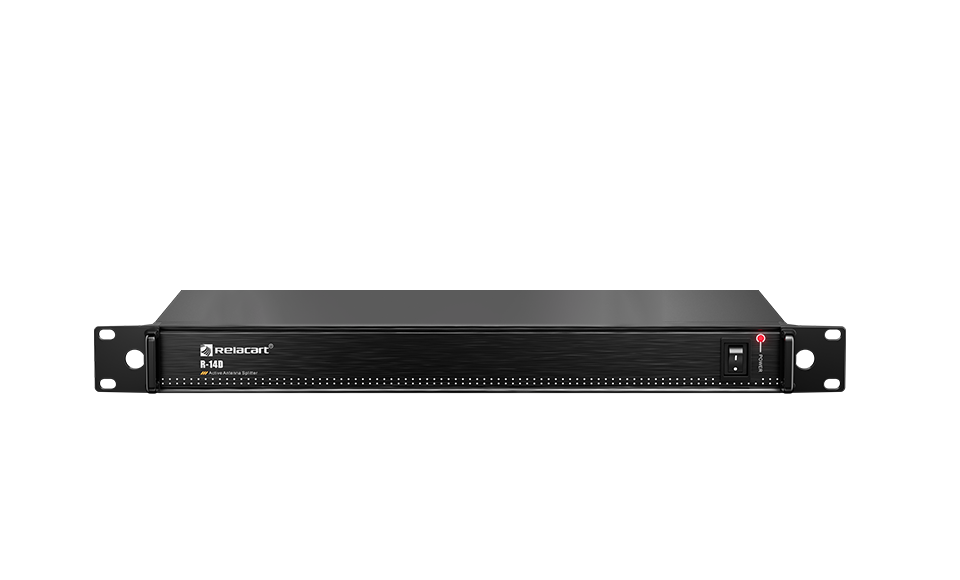
The R-14D four-channel antenna distribution system: one rack unit that feeds four receivers without signal loss
"How many wireless channels can I put in one rack?" sounds like a question about receivers. It is actually a question about antennas, power, heat and a number printed on the back panel in millimetres.
This guide answers it the way an installer would: starting from the chassis, walking through a fully costed 16-channel example, and ending at the three failure modes that actually kill racks in the field. Every specification quoted is taken from the official product pages for the UR-2Q, HR-32D, UR-280 and R-series distribution hardware.
How Many Channels Fit in One Rack Unit?
An EIA rack unit is 44.45 mm of front-panel height. What fits inside it decides everything downstream.
The UR-2Q holds four true-diversity receiving channels in one unit, at 480 x 350 x 43 mm deep. The HR-32D holds two channels with true diversity reception in 410 x 206 x 43 mm and about 1.8 kg. The UR-280 also holds two channels in the same 410 x 206 x 43 mm footprint. All three run from AC 100-240 V.
On pure channel density, quad receivers win: four UR-2Q units deliver 16 channels in 4U. Mixing chassis types is normal, though - many racks pair a quad for the stage mics with a dual for a lectern or a presentation handheld.
What one rack unit buys you
| Receiver | Channels per 1U | Bandwidth (region dependent) | Audio path | Depth |
|---|
| UR-2Q | 4 | 130 MHz (521.25-936.85 MHz) | 96 kHz / 24-bit, S/N > 105 dB, Dante | 480 x 350 x 43 mm |
| HR-32D | 2 (single/dual mode, true diversity) | 130 MHz (521.25-936.85 MHz) | 96 kHz / 24-bit, S/N > 105 dB, Dante | 410 x 206 x 43 mm |
| UR-280 | 2 | 64 MHz (521.25-936.85 MHz) | S/N > 110 dB, FM analog path | 410 x 206 x 43 mm |
A Worked Example: 16 Channels in 5U
Here is the arithmetic for a mid-size corporate show rack, fully costed in rack units:
Four UR-2Q receivers = 16 channels in 4U. One R-14D distribution system = 1U, feeding all four receivers from a single antenna pair. Total: 5U of rack, one power strip (every device runs AC 100-240 V; the R-14D draws 800 mA), and exactly two antenna cables leaving the rack instead of eight.
The same 16 channels built from dual-channel chassis would need 8U, eight antenna feeds and a much deeper power budget. Channel density is not vanity - it is the difference between a rack that fits under a desk and one that needs its own flight case.
- 4 x UR-2Q: 16 channels, 4U, each unit 480 mm deep - verify rack depth at order time
- 1 x R-14D: 1U, 500-950 MHz, 0 dB +/- 1 dB per-port gain, biases each receiver port at +12 V DC / 150 mA
- 2 x R-32AU active antennas: 470-950 MHz, 6.5 dB or better antenna gain, 0-15 dB adjustable amplifier, 75 mA at 6-12 V DC
- Total: 5U, one antenna pair, one power feed per device
What Limits Channel Count: Antennas or Receivers?
Receivers are not the limit on channel count; the antenna tree is. Every passive split taxes the signal: the R-12S divider costs 3.5 dB (plus or minus 1 dB) per split across its 400-1000 MHz range.
That sounds small until it compounds. Two levels of passive splitting - a common improvisation when racks outgrow their antenna plan - remove about 7 dB before a single metre of coax is counted. On a weak stage signal that is the difference between a solid channel and intermittent dropouts. The active R-14D exists precisely to reset that arithmetic: 0 dB plus or minus 1 dB per output port, so four receivers see the antenna as if each had it to itself.
The practical ceiling rule: one layer of active distribution per rack. If a rack needs more receiver ports than the R-14D offers, add a second distribution unit fed by its own antenna - do not cascade passive dividers behind it.
Isolation is the second half of the spec that matters. The R-12S specifies better than -20 dB port-to-port isolation, which keeps a strong transmitter's leakage out of a neighbouring receiver. Active ports on the R-14D buffer each output, so one receiver's local oscillator junk stays on its own port - one of those unglamorous specs that shows up as "mysterious birdies" when it is missing.
How Much Power Does a 16-Channel Rack Actually Draw?
Less than you would think, and the details are worth knowing before the power distro is ordered.
Every receiver in this guide runs from AC 100-240 V mains. The R-14D distribution unit adds one more mains feed and draws 800 mA. Its four output ports can each bias a receiver's antenna input at +12 V DC with a 150 mA maximum - that bias is what lets a remote amplifier antenna such as the R-32AU (75 mA at 6-12 V DC) run without a mains outlet at the antenna position.
A complete 16-channel rack - four UR-2Q units plus one R-14D - therefore needs five mains outlets and nothing else. There is no incremental power cost per channel, no special circuits, and no heat management story beyond leaving 1U of ventilation between chassis in a closed rack. Compare that with the alternative architecture: eight dual receivers need eight mains feeds, sixteen antenna cables and eight times the patching.
Where Do Racks Go Wrong in the Field?
Three failure modes account for most service calls, and none of them involve the receivers being broken.
One R-14D in the rack replaces eight antenna cables with two
- Antenna starvation: receivers daisy-chained through two passive divider levels, losing about 7 dB before cable loss - symptoms are dropouts at consistent spots on stage, worst at the upstage edge
- Band-plan collisions: a 64 MHz dual-channel receiver and 130 MHz quad receivers coordinated as one fleet without checking that their usable windows overlap in your region - the hardware tunes 521.25-936.85 MHz, but your license does not
- Depth and bias surprises: 480 mm chassis ordered for a 450 mm rack, or a powered antenna connected to a receiver port whose bias is off - both are ten-second checks at order time and hour-long fixes on site
Antenna Plan First, Channel Count Second
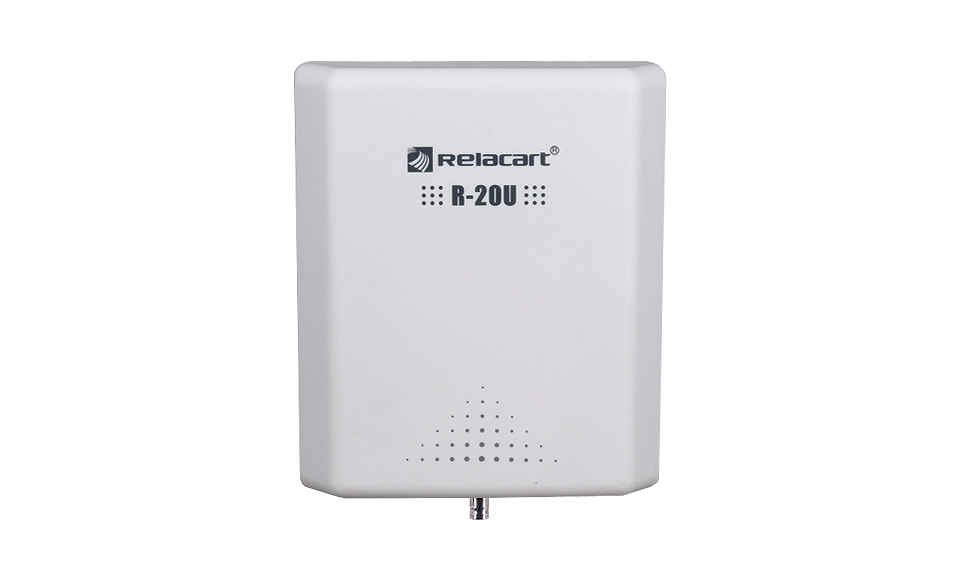
The correct order of design is antennas first: where the antennas live, how the signal reaches the rack, and how it is shared. Only then does channel count fall out of the plan. Our longer guide to antenna distribution for wireless microphone systems covers that layer in depth, including when a directional panel antenna such as the R-20U (600-900 MHz, 7 dBi) is the better front end than an amplifier antenna.
A note on transmitters, since they belong to the same channel-count arithmetic. Every transmitter in these fleets runs on two AA cells - the UR-2Q's UH-2 handheld and UT-2 bodypack draw about 130 mA for roughly 8 hours, the HR-32D's H-32 handheld runs about 10 hours on alkaline cells, and the UR-280's UH-280 offers 10, 30 or 100 mW of selectable RF power. Sixteen performers means thirty-two AA cells in the show battery budget, which is why fleet standardisation matters as much as rack density.
If this article has a one-line summary, it is this: a modern rack holds more channels than most venues will ever switch on - what limits you is whether the antenna tree, the power budget and the frequency plan were designed to match the chassis.
Pre-Order Checklist
Six checks, in the order that catches the expensive mistakes first:
- Count simultaneous microphones, not total microphones owned - dead channels in the rack cost rack space and planning headroom
- Pick chassis by channel density: 4 channels per UR-2Q unit, 2 per HR-32D or UR-280, and decide Dante versus analog outputs deliberately
- Add 1U of R-14D per antenna pair, plus 1U of ventilation in a closed rack
- Verify rack depth against 480 mm chassis plus a rear BNC bend - about 550 mm of real clearance
- Confirm bias: receiver antenna ports supply +12 V DC / 150 mA, which defines which remote antennas can be powered over the coax
- Check your national regulator for legal UHF slices before writing the frequency plan - the hardware range is not a license
Frequently Asked Questions
Can I mix quad and dual receivers in the same rack?
Yes. A common pattern is quads for stage channels and a dual such as the HR-32D for lectern or presentation duty. Coordinate their frequencies as one plan and feed them from the same distribution layer.
How many R-12S dividers can I cascade?
Each split costs 3.5 dB, so two levels already remove about 7 dB. Beyond one passive level behind an active distribution unit, add a second R-14D fed by its own antenna instead.
What is the first thing to check when a rack-built system drops out?
Antenna history, not receiver settings. Ask what changed on the antenna tree last: a new splitter level, a longer cable, or a bias switch left off will produce exactly the same-spot dropout symptoms that get misdiagnosed as interference.