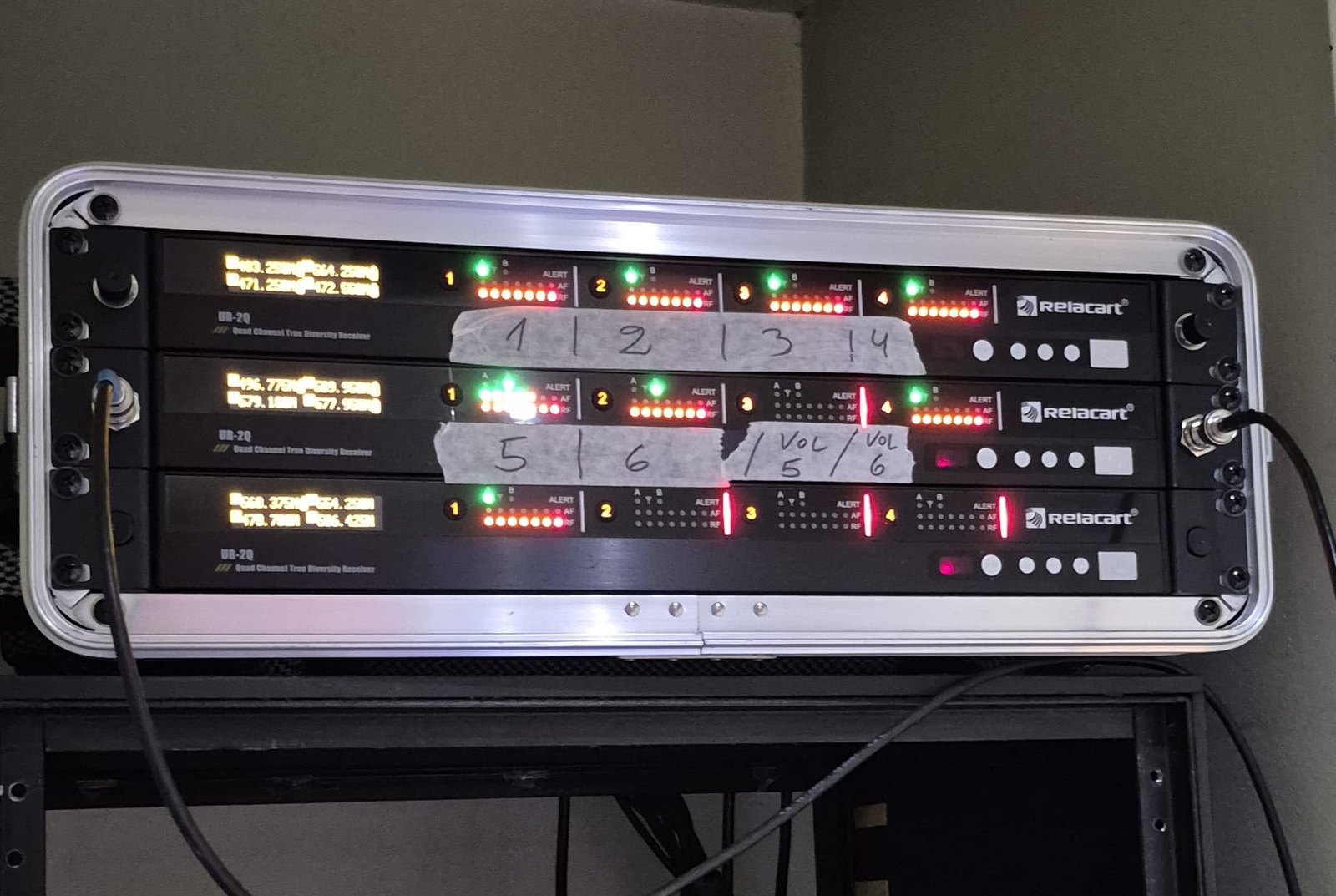
UR-2Q quad-channel true diversity receivers racked at the ASSAL/IAIS conference in Latin America
A true diversity wireless microphone receiver keeps two independent antenna paths per channel and switches to whichever is stronger, so the link survives the drop-outs that kill single-antenna receivers in real venues. It is the difference between a system that works at the bench and one that works when the president starts speaking.
The term gets quoted in every brochure, so this article does something more useful: it shows what true diversity actually handled at three recent, very different Relacart installations - an insurance regulators' summit in Latin America, a presidential address in Peru, and a Formula 1 circuit redevelopment in Hungary, all built on the UR-2Q quad-channel receiver.
How True Diversity Works in One Paragraph
Radio signals reflect off walls, people and steel structures, so at any position the signal can arrive slightly out of phase and cancel itself - a null. A diversity receiver feeds two antennas placed a wavelength or more apart into two complete RF paths and selects, per channel, whichever path currently has the cleaner signal. The UR-2Q extends the idea with four channels in one chassis and 130 MHz of switching bandwidth (depending on region), so four microphones share one receiver and each still gets the diversity benefit.
For the channel-count trade-offs around it, see single vs dual vs four-channel wireless microphone systems.
Deployment 1: A Regulators' Summit That Could Not Afford a Drop-Out
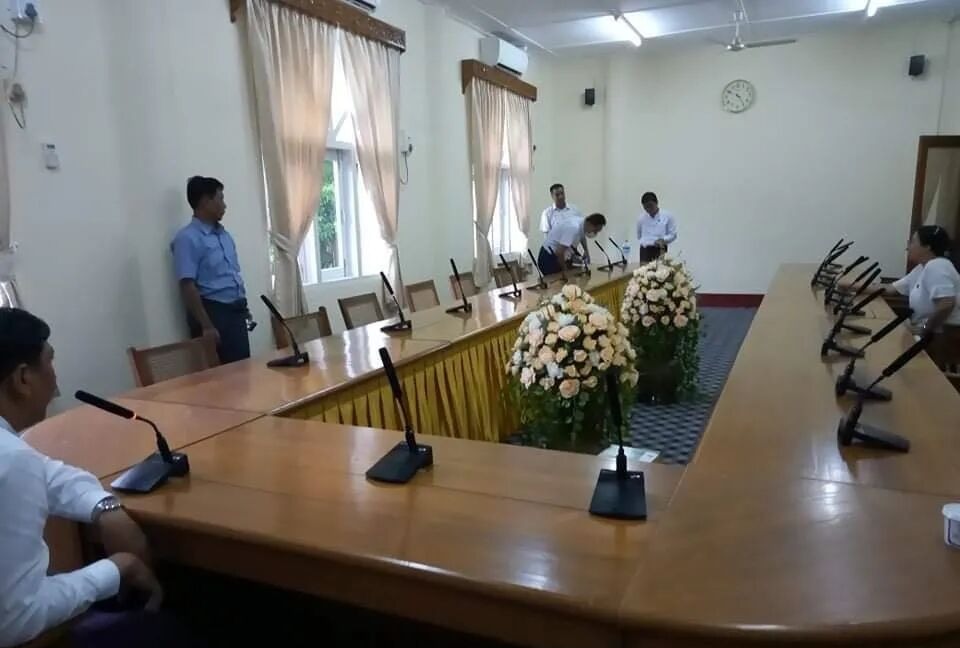
At the XXIII ASSAL/IAIS conference in Latin America - insurance supervisors and standard-setters from multiple countries - the brief stated that any audio drop-out or noise interference would undermine the seriousness of the event, so the system had to keep transmitting reliably despite a complex on-site RF environment.
The UR-2Q's diversity reception handled the RF side; its Dante network audio output handled the recording side. The event was livestreamed and recorded end to end, and the deployment window was extremely limited - requirements that favor a receiver which integrates directly into networked audio instead of analog tie-lines.
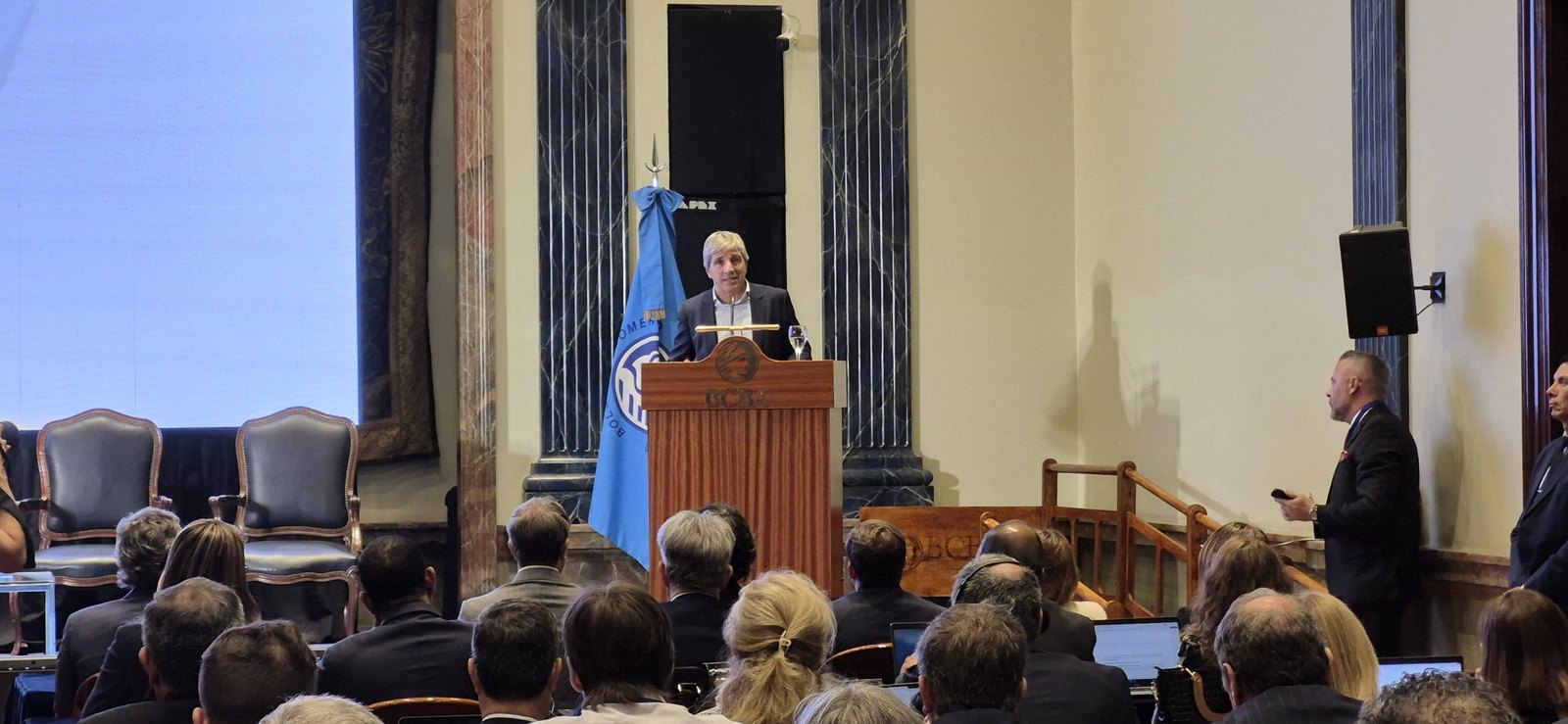
Main hall of the XXIII ASSAL/IAIS conference
Deployment 2: A Presidential Address
The Peruvian presidential speech deployment put the same hardware in front of a head of state. Presidential-level events compress every requirement: the speech intelligibility had to reproduce tone, emotion and linguistic nuances free from distortion or ambient noise, and there is no second take if the RF link hiccups.
True diversity plus the UR-2Q's DSP-based digital audio expansion is what makes that a realistic promise rather than a hope. The same deployment template has since been reused for cross-border summits and government-level conference projects.
Deployment 3: Nine UR-2Q Receivers at an F1 Circuit
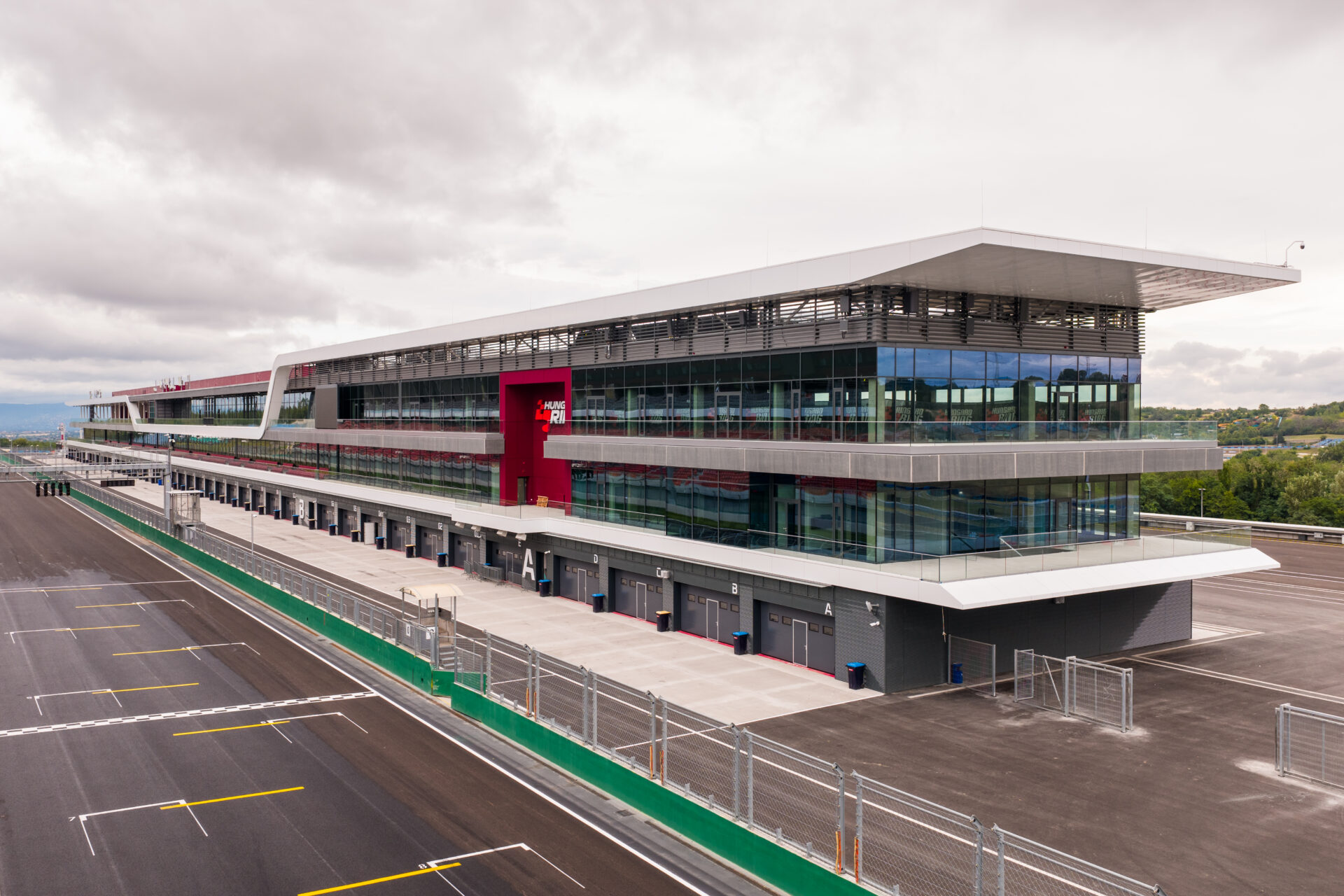
The Hungaroring redevelopment in Hungary is the scale test: the venue's wireless microphone layer is built on nine UR-2Q four-channel true diversity receivers - 36 channels across grand prix weekends, conferences and corporate events. The 130 MHz switching bandwidth gives the venue ample frequency space, and Dante output drops every channel straight into the new networked audio infrastructure.
RF coverage across the redeveloped buildings is provided by twenty-two R-32AU wideband active UHF directional antennas with built-in amplifiers - the antenna layer that lets a diversity receiver actually see two clean paths everywhere. Pair this article with our antenna distribution guide when planning large venues.
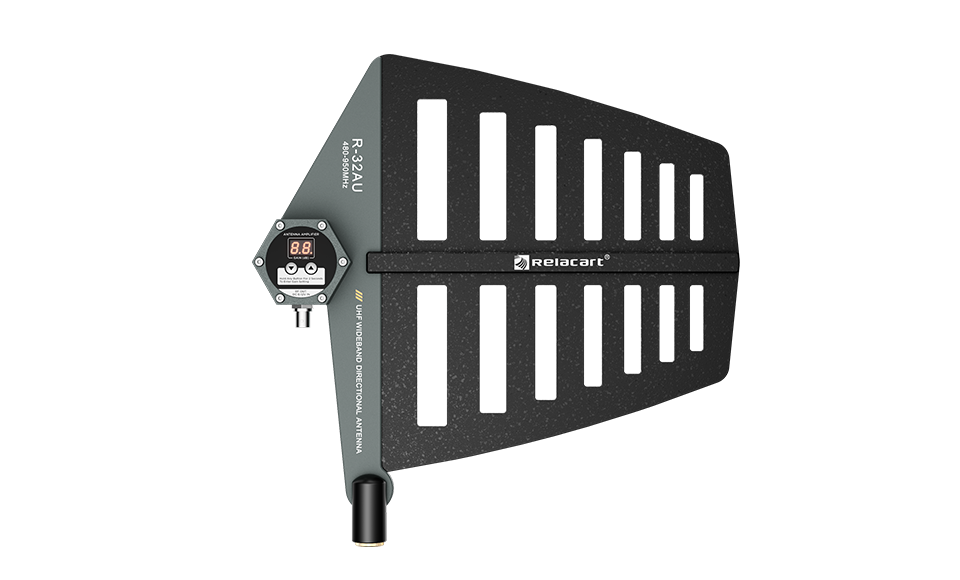
R-32AU wideband active UHF directional antenna, Hungaroring deployment
Deployment Notes for Your Own Venue
- Place diversity antennas a wavelength or more apart; two antennas on one rack rail is not diversity.
- Budget one UR-2Q chassis per four wireless channels before adding spares - 36 channels at Hungaroring came from nine chassis.
- In RF-hostile venues, add directional antennas at the stage line rather than raising transmitter power.
- Pre-coordinate frequencies with the AFS auto-search on the day of the event, not the day before.
- If the event is recorded or streamed, prefer the Dante output over analog - one Cat6 line replaces a loom of XLRs.
- Walk the venue with a transmitter during setup: diversity hides nulls until you stand in them.
Is true diversity worth it in a small meeting room?
Usually yes at the receiver level, because conference rooms are exactly where people walk between the transmitter and the antennas. A quad-channel chassis like the UR-2Q also reduces rack space and cabling compared with four single-channel receivers.
What does the 130 MHz switching bandwidth actually buy?
It is the total frequency range across which the system can tune (depending on region). Wide bandwidth means more interference-free channels coexist and the system can re-plan around local RF without swapping hardware - critical when nine systems share one venue.
Does diversity fix interference from phones and Wi-Fi?
No. Diversity fixes multipath cancellation. Interference is handled by frequency planning, DSP filtering and clean channel selection - which is why both diversity and bandwidth belong in the same purchase conversation.