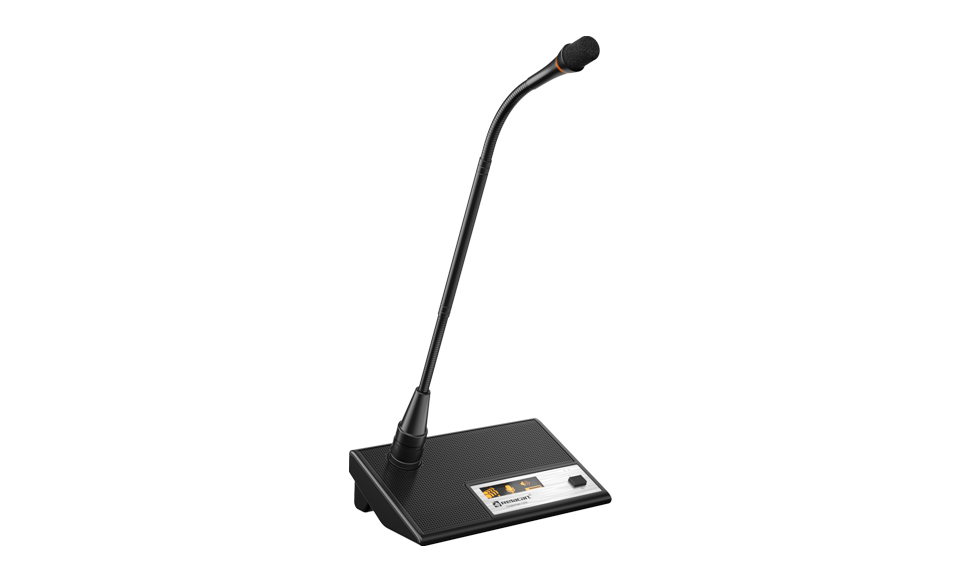
A tuning-platform family: one RF design reused across receivers, handhelds and bodypacks is the kind of lineage only an original manufacturer can show.
Type "true diversity wireless microphone manufacturer" into a search engine and you will get pages of suppliers, each claiming to manufacture. Some do. Some assemble other people's boards. Many simply trade, printing their logo on hardware bought from whoever quotes lowest that month. The word "manufacturer" carries no legal weight in most markets, which is why it appears on every website regardless of what happens behind it.
The distinction matters long before you sign anything. A true manufacturer can re-tune hardware for your market, hold spare parts for a model it discontinued, and push a firmware fix through its own toolchain. A trader can promise all of that; it just cannot deliver any of it. This article is the desk-side version of our factory audit checklist: five things you can verify from a catalogue, a certificate and a download page - before you spend a cent on flights.
OEM, ODM and Original: Three Labels, Three Different Risk Profiles
The terms are used loosely, so pin them down. An <strong>OEM reseller</strong> buys finished goods from a factory and markets them under its own name. It owns no tooling, no firmware and usually no documentation beyond a brochure. An <strong>ODM buyer</strong> takes a factory's existing platform and asks for cosmetic changes - a different housing colour, a renamed model. The engineering stays on the other side of the table. An <strong>original manufacturer</strong> designs, tests and builds its own platforms: it owns the RF design, the firmware, the test procedures and the tooling, and it answers for all four.
None of these is automatically disqualifying - plenty of legitimate businesses trade hardware profitably. But each demands a different contract. A reseller cannot sign a firmware-roadmap commitment because it does not control firmware. An ODM client cannot promise you a custom frequency band because it does not control the RF stage. Knowing which one you are actually talking to tells you which promises to take seriously, and which to get in writing from the party that can keep them.
What You Can Verify From Your Desk
- Catalogue lineage — A manufacturer's catalogue reads like a family tree: several product generations on shared platforms, spare parts referenced by model, accessories matched to specific SKUs. A trader's catalogue reads like a market stall - whatever sells, from UHF systems to PA speakers to cables, with no visible engineering connection between entries.
- Certificate holder — Every certification certificate names an applicant or holder and a factory address. Ask for the certificates for the exact models you intend to buy and check three fields: the holder name, the manufacturer name and the factory address. When all three point to the same company as the product branding, the chain is short. When the holder is a different entity from the brand on the box, you have found the trader.
- Software toolchain — Firmware update utilities, PC-based control and monitoring software, and in-house measurement tools cannot be bought from a components catalogue. They are written by engineers who understand the platform, which makes them the hardest credential to fake.
- Patents and copyrights — A national patent and software-copyright register is searchable by anyone. A supplier claiming R&D depth should be able to hand you a dated list that you can verify against the public register - not just the word "patented" on a product page.
The Catalogue Test: Lineage Beats Assortment
Open a candidate supplier's catalogue and read it the way an engineer would. Depth is the signal: one RF platform appearing across a quad-channel rack unit, a dual-channel unit and a hybrid Dante receiver; handheld and bodypack transmitters sharing the same tuning window; antenna distribution and directional antennas specified with numbers that interlock with the receivers they serve. That kind of consistency happens only when one design team owns the platform across generations.
Assortment is the opposite signal. If the wireless pages sit beside karaoke speakers, DJ controllers and stage lighting with no shared engineering story, you are most likely looking at a trading catalogue. There is nothing wrong with trading companies as logistics partners - the error is assuming their warranty means the same thing as a manufacturer's. Our guide to why brand depth matters in pro audio covers what three decades of continuous platform development looks like from the outside.
Certificates Name the Maker - Read the Whole Page
Certificates are the single most efficient desk-side test, and most buyers skim them. Slow down and read four things. First, the holder: is it the same legal entity as the brand on the product? Second, the factory address: a manufacturing certificate should name a real production site, not a shared-office suite. Third, the model list: does the certificate cover your exact model, or a "similar family member" that never ships? Fourth, the dates and scope: a certificate can be real and still expired.
This is also where trademark records earn their keep. A brand with registrations in its major export markets, filed in its own name and dated back years, is behaving like a manufacturer with something to protect. A "brand" whose trademark search comes back empty, or registered to a third party, is renting its identity - and you would be renting it too. For the channel-side version of this check, see our guide to identifying genuine products and authorised channels.

A registered trademark certificate is public evidence: the holder, the classes covered and the first-use date are all checkable facts.
Software Is the Hardest Thing to Fake
Hardware can be bought from anyone. Software that talks to hardware cannot. When a supplier ships PC control software that monitors receiver status in real time, publishes firmware update utilities for legacy models, and builds its own measurement instruments, that stack represents engineers who designed the platform - not a cataloguer who photographed it.
A concrete example from our own line: the U.Discover portable spectrum analyser was developed in-house as a field tool for frequency scanning, covering 240 to 960 MHz in 1 MHz steps with a 90 dB dynamic range. We built it because our engineers needed it for venue work, then productised it. A trading company can sell you a spectrum analyser; it cannot explain why its own receivers need one.
The practical test: download the supplier's software before the first purchase order. Does it run? Does it cover products from several years ago? Is it versioned, with release notes? Software that is alive is the shortest proof that engineering exists behind the catalogue.
Platform Consistency: Reading One Platform Across a Family
Original manufacturers reuse engineering, and reused engineering leaves fingerprints in the specifications. Look at our true diversity UHF platform: the UR-2Q quad-channel receiver, the UR-280 and the HR-32D hybrid Dante system all draw on the same 521.25-936.85 MHz tuning range, quote comparable sensitivity figures (5 dBμV at 25 kHz deviation for S/N above 60 dB), and share antenna interfaces - dual BNC sockets with +12 V bias for active antennas.
That consistency is not accidental. One RF platform, one audio chain, one set of test procedures - expressed in different channel counts and form factors. A reseller's "family" assembles whatever the factory shipped that quarter, which is why its spec sheets never quite agree with each other. If you want to go deeper into what those sensitivity and SNR figures actually commit a supplier to, our datasheet reading guide walks every row.
Why It Matters After the Purchase Order
The desk-side checks cost you an afternoon. Skipping them costs you over the ownership cycle, in four currencies. <strong>Spares:</strong> a manufacturer holds parts for models it built; a trader holds whatever its last container contained. <strong>Firmware:</strong> when a bug surfaces, only the platform owner can fix it - everyone else forwards your email and hopes. <strong>Customisation:</strong> region-specific frequency bands and private-labelled accessories are possible only when tooling and firmware live in-house. <strong>Warranty:</strong> a manufacturer's warranty is backed by its own production records and serial-number traceability; a trader's warranty is backed by a promise to chase someone.
None of this makes resellers worthless - they solve real distribution problems. It makes <em>misidentification</em> expensive. Match the contract to the reality.
From Desk to Factory Floor
Once the desk-side evidence holds up - lineage, certificates, software, patents - the next step is physical: our factory audit checklist turns a one-day visit into a structured verification of what the documents claimed. And if the desk-side evidence fails, you have saved yourself the flight.
The sequence is deliberate: verify from your desk, audit from the floor, then buy. Suppliers with nothing to hide make all three steps easy, because each one keeps proving the last one right.