Grandstand event coverage: dense RF environments are where the choice between UHF and 2.4 GHz is decided
Both bands carry audio from a microphone to a receiver. They are not interchangeable, and the difference is not audio quality - it is physics and law. 2.4 GHz offers paperwork-free portability in a shared, crowded slice of spectrum. UHF offers dedicated, wide spectrum with better propagation, in exchange for frequency rules that differ by country.
This guide compares them for live sound specifically - stages, events, multi-microphone rooms - using only figures verifiable from primary regulatory sources and from the specification pages on this site. No brand names appear here except ours, and no country is claimed to have rules it does not.
What 2.4 GHz Does Well
The 2.4 GHz band is license-exempt in most markets and needs no frequency coordination paperwork. It is the natural home of presentation systems: a handheld and a bodypack in a training room, a lecturer walking between campuses, gear that flies to a new country without a license application.
Digital transmission suits the band well: the equipment is compact, battery-friendly, and the antenna can hide inside the microphone handle. For one or two microphones in a room with modest Wi-Fi traffic, a 2.4 GHz system is often the pragmatic choice.
It also wins the standardisation argument. Because the band rules are broadly similar across markets, a fleet of 2.4 GHz presentation units behaves the same in Singapore, Santiago and Stockholm - no re-planning per city, no regional hardware variants, no license folder in the flight case. For organisations whose wireless needs are a handful of microphones in meeting rooms, that consistency is real value, and pretending otherwise oversells UHF.
Where Does 2.4 GHz Struggle in a Live Venue?
Three structural problems appear exactly when "live sound" starts. First, the band is only 2.400-2.4835 GHz wide - about 83.5 MHz in total - and it is shared with Wi-Fi and Bluetooth everywhere, permanently. A corporate event with audience Wi-Fi, streaming laptops and staff radios is a very different RF environment from the quiet training room the system was demoed in.
Second, physics. Free-space path loss rises with frequency, and human bodies absorb 2.4 GHz strongly - a handheld gripped in a fist loses noticeably more than the same grip at UHF. Performers who walk in front of the antenna pay a higher tax per body.
Third, density. Squeezing a handful of simultaneous channels out of 83.5 MHz that Wi-Fi also wants is realistic; squeezing sixteen is not, because each digital channel occupies a wide slot and the interference budget is shared with devices you do not control.
Why Is UHF Still the Live-Sound Workhorse?
UHF wins on the three axes that decide live shows: propagation, dedicated spectrum and density. Lower frequencies penetrate crowds and clear walls with less loss, and the UHF television bands offer hundreds of megahertz of spectrum whose primary users - broadcast TV - are static and predictable, unlike the laptop in row three.
The regulatory picture, verified from primary sources: in Europe, 470-694 MHz is the core band for professional audio PMSE use (ERC Recommendation 70-03, Annex 10), with 863-865 MHz available license-exempt at low power (typically 10 mW e.r.p). In the United States, FCC rules permit unlicensed wireless microphones in the 470-608 MHz TV-band slice, the 614-616 MHz guard band and the 657-663 MHz duplex gap, at up to 50 mW EIRP in the TV bands. Elsewhere, ranges and power limits differ - always confirm with your national regulator before coordinating.
How Many Channels Can Each Band Realistically Host?
A back-of-envelope comparison makes the density gap concrete without any vendor arithmetic.
On 2.4 GHz, the whole 83.5 MHz is shared, and a typical digital wideband channel occupies a chunky slot of it. Because Wi-Fi access points and Bluetooth devices transmit on the same frequencies without coordinating with you, the usable share shrinks with every device in the room. The practical outcome is that a handful of simultaneous channels is realistic, and each additional microphone competes directly with the office network.
On UHF, the spectrum is wider and the neighbours are slower-moving. A 130 MHz working band - what the UR-2Q and HR-32D carry, region permitting - hosts an 8- to 16-channel plan with several hundred kilohertz of protective spacing per slot, and the primary occupants (broadcast television) neither move around the room nor appear when the audience arrives. That is why a written UHF frequency plan survives the show, while a 2.4 GHz plan has to survive the audience.
The Licensing Reality Check
This is the part that trips up travelling gear. UHF transmitters are legal hardware everywhere and legal frequencies nowhere in general - every country slices the UHF band differently, and the same physically-tunable receiver may face completely different legal windows in two neighbouring markets.
That is also why this site's own spec sheets read the way they do. The UR-280 lists a 64 MHz bandwidth "depending on the region"; the UR-2Q and HR-32D list 130 MHz the same way; the UH-222 handheld lists 134 MHz. All tune across 521.25-936.85 MHz of hardware range - wide enough to serve several national plans from one fleet, never a substitute for checking the local rules.
The 2.4 GHz band has the opposite profile: near-universal legality, zero coordination control. For live sound the question is not which band is legal - it is which band stays reliable once the venue fills up.
When you do check a national regulator, three questions settle the UHF picture quickly: which frequency slices are open to wireless microphones in my area, at what maximum power, and does anything here need a license or registration? The answers vary widely between countries, but they are always published, and they always fit on one page. Gear that tunes 521.25-936.85 MHz gives you the flexibility to act on those answers; the answers themselves come first.
Channel Density: The Deciding Factor for Shows
The pattern is consistent: 2.4 GHz wins on paperwork and loses on density. The more microphones work at once, and the more hostile the room, the harder it is to substitute one for the other.
One more axis worth naming explicitly: predictability of failure. A 2.4 GHz system degrades unpredictably - it works at rehearsal and degrades when the audience's phones fill the air. A planned UHF system degrades predictably: if the plan accounts for the TV transmitters and the other PMSE users in your area, the show behaves the same with two hundred people in the room as it did with none. For anyone who has watched a ceremony drop out mid-speech, "predictable" is not an abstract virtue.
The two bands, side by side for live-sound use
| Attribute | 2.4 GHz | UHF (TV bands, region dependent) |
|---|
| Spectrum typically available | about 83.5 MHz total, shared with Wi-Fi and Bluetooth | tens to hundreds of MHz, shared mainly with broadcast TV |
| Primary interference sources | Wi-Fi access points, streaming, staff radios - uncontrolled | TV transmitters and other PMSE users - static and plannable |
| Realistic simultaneous mics | a handful, interference permitting | dozens with a written frequency plan |
| Body and crowd absorption | higher; handhelds lose more in a tight grip | lower; better behaviour through audiences |
| License paperwork | none in most markets | varies by country and band slice |
| Best fit | 1-2 mics, training rooms, travel kits | stages, events, fixed installs, anything multi-mic |
What Does Wideband UHF Hardware Actually Buy You?
A receiver that tunes 521.25-936.85 MHz with a 130 MHz working band - like the UR-2Q - gives a rental fleet one hardware SKU that serves several national frequency plans, and gives a fixed install room to grow from 4 to 8 channels without re-buying transmitters. It also makes frequency changes cheap: when a local broadcast appears on your slot, a wideband receiver re-plans instead of re-invests.
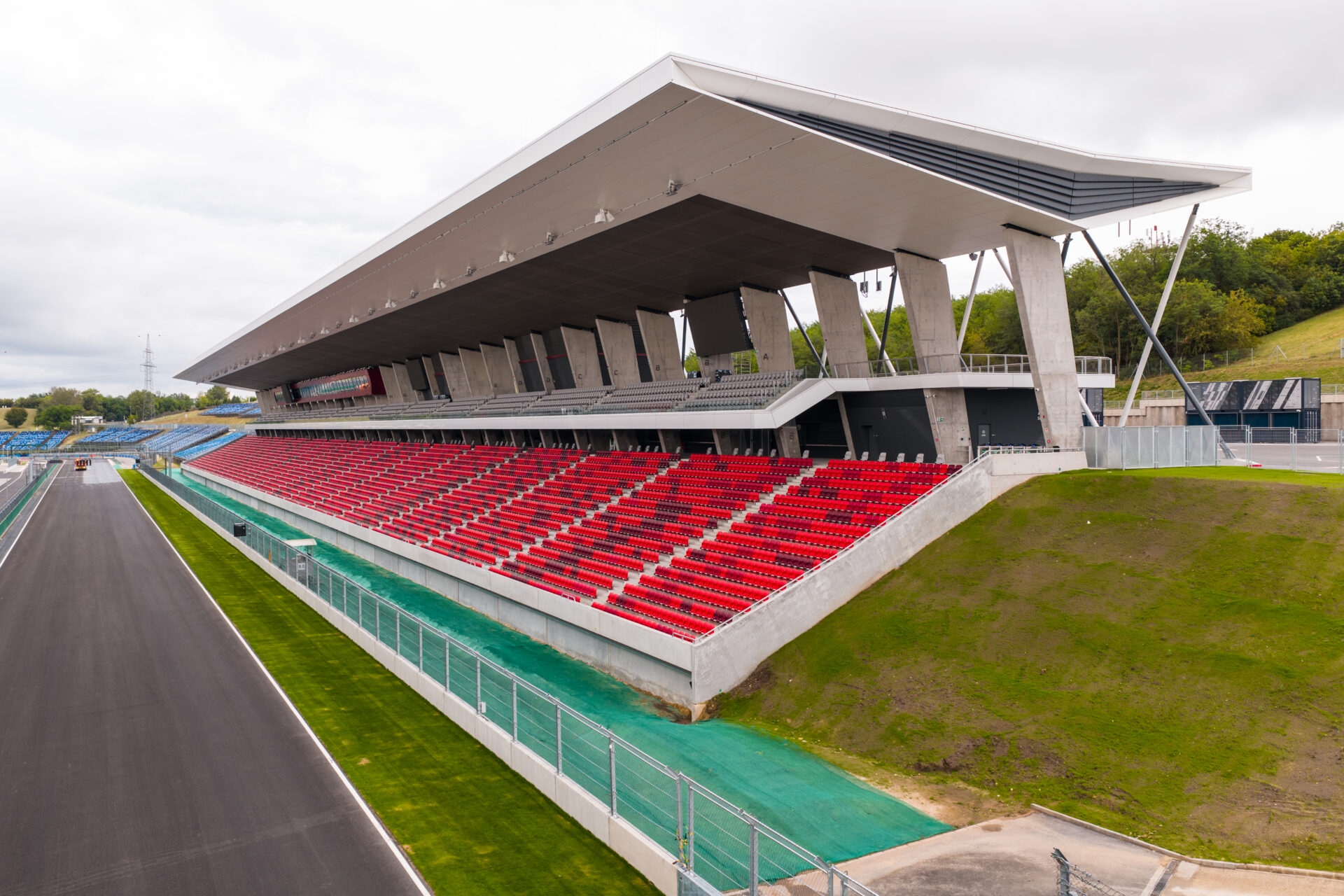
The Hungaroring circuit redevelopment is the reference case for UHF under pressure: nine UR-2Q quad receivers working alongside Dante endpoints at a circuit filled with broadcast RF, comms and camera links - exactly the environment where a shared-consumer band would have run out of room first.
Event-scale RF: the environment where UHF's dedicated spectrum earns its keep
So Which Band Should You Buy?
If the decision table has a tiebreaker, it is this: buy for the busiest hour the system will ever work, not for the demo. 2.4 GHz is reliable until the room fills; UHF is reliable because the plan holds.
A decision rule that survives contact with real venues
| Your situation | Better fit |
|---|
| One or two mics, training or lecture rooms, frequent travel between countries | 2.4 GHz - no license coordination, compact hardware |
| Panel discussions and services with 4+ live mics in one room | UHF - density and a plannable interference picture |
| Stages, festivals, houses of worship with bands | UHF - crowd absorption and channel count decide this |
| Mixed fleet across several countries | Wideband UHF hardware, with the frequency plan set per market |
| Anything with IEM monitor packs and microphones at once | UHF - both need spectrum, and 2.4 GHz will not host both |
Frequently Asked Questions
Is 2.4 GHz digital audio lower quality than UHF analog?
No - audio quality lives in the codec and the audio path, not the band. The practical differences are congestion, body absorption and channel density, which are physics and law, not fidelity.
Can one wideband UHF receiver be used in any country?
The hardware tunes 521.25-936.85 MHz, but legality is set country by country. Check your national regulator for permitted slices and power limits before coordinating - regional differences are exactly why spec sheets mark bandwidth as region-dependent.
Why does my 2.4 GHz system only drop out when the audience arrives?
The audience brings two things: bodies that absorb 2.4 GHz, and phones opening Wi-Fi on the same spectrum you are transmitting on. Neither exists in an empty demo room, which is why the problem never shows up there.